Starting point
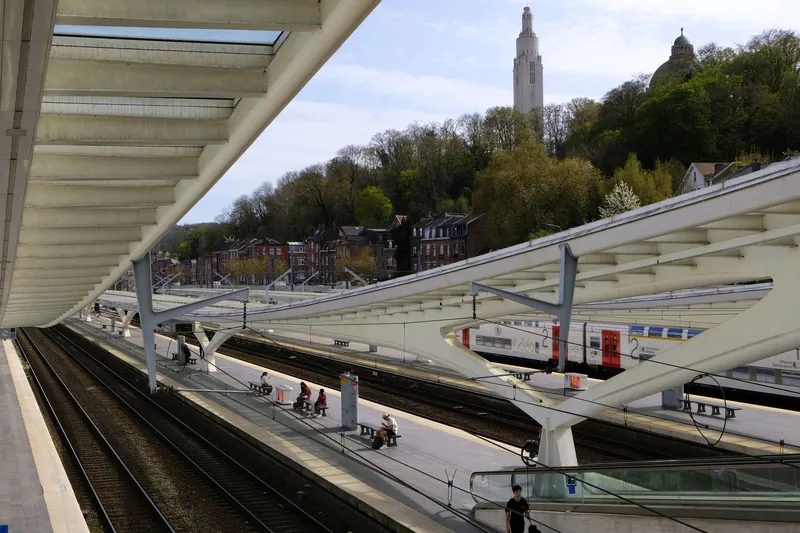
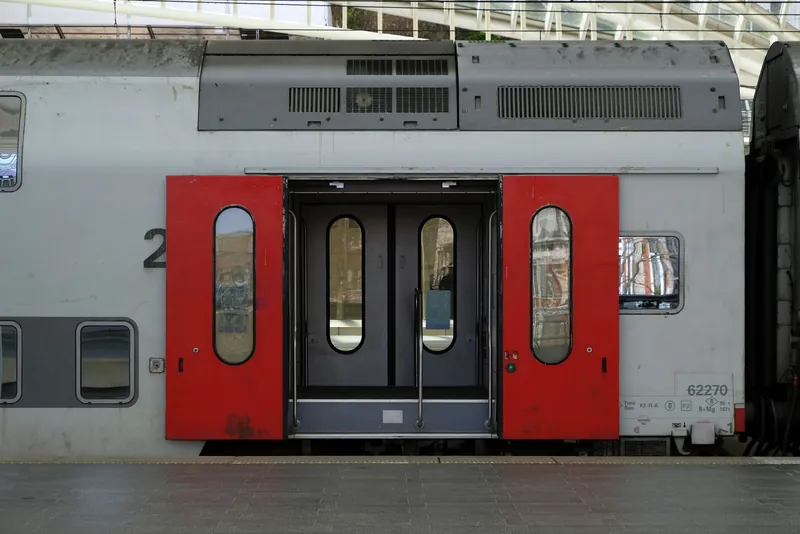
On a university trip to Liège, we visited the Robert Doisneau retrospective at La Boverie, the photographer behind the famous portrait of Picasso with bread rolls for fingers. Afterwards, our photography professor Oliver Schuh gave us one to two hours to photograph Liège-Guillemins, Santiago Calatrava's station of steel, glass and white concrete.
Idea & approach
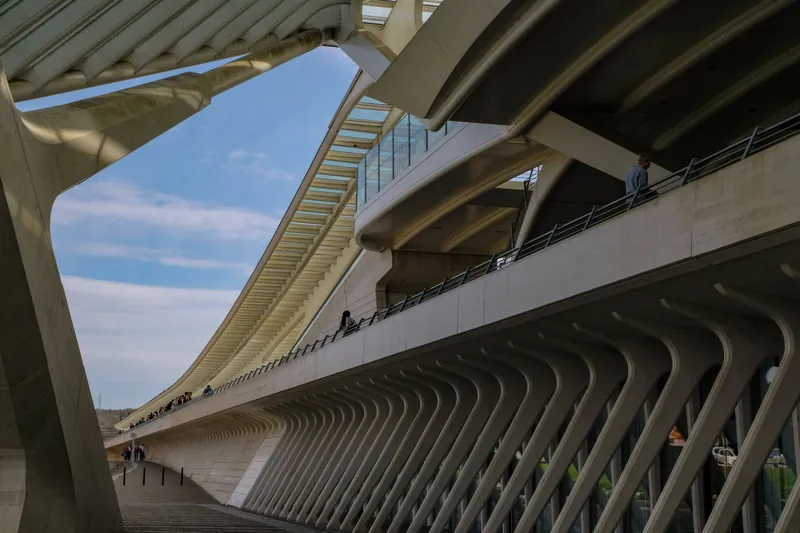
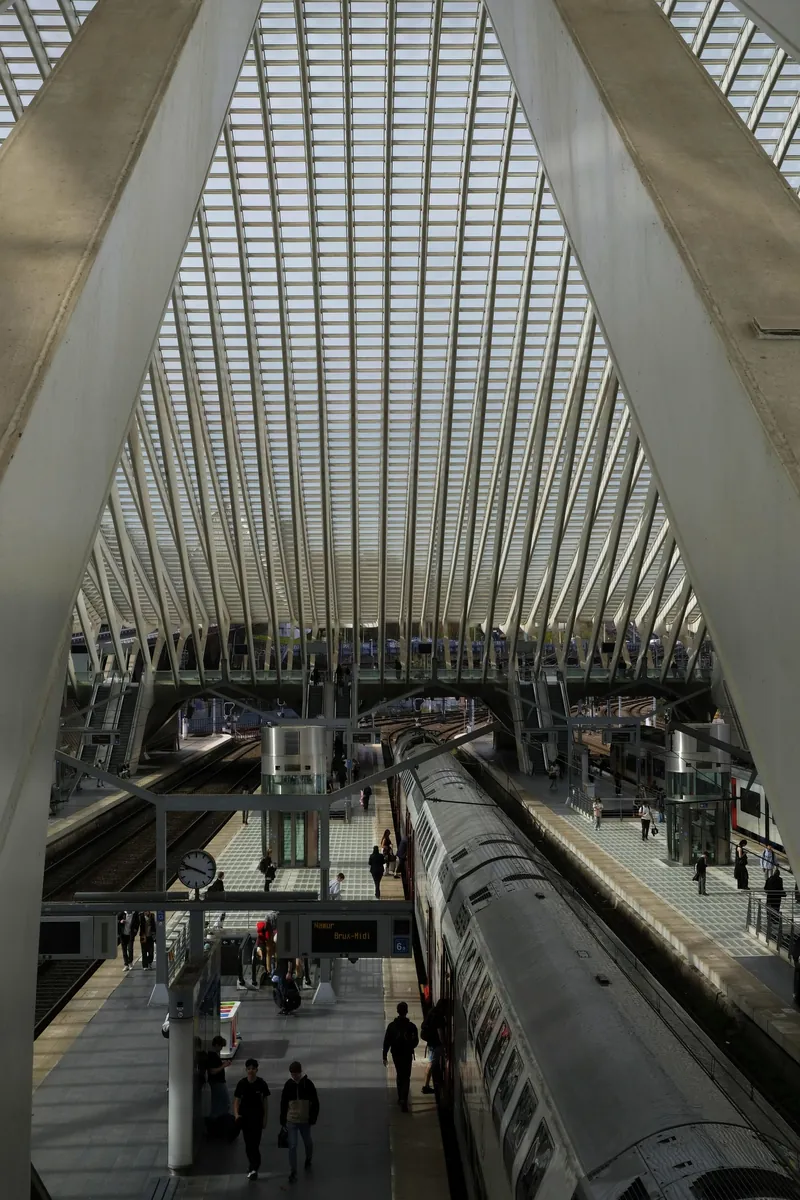
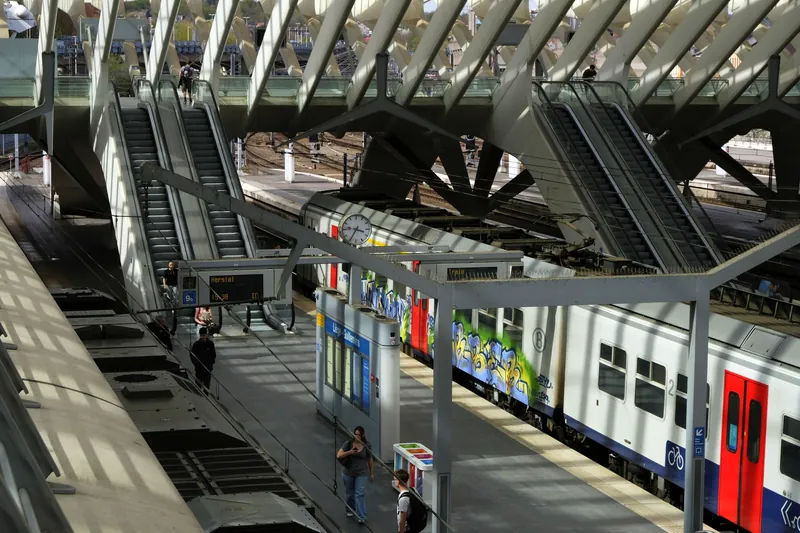
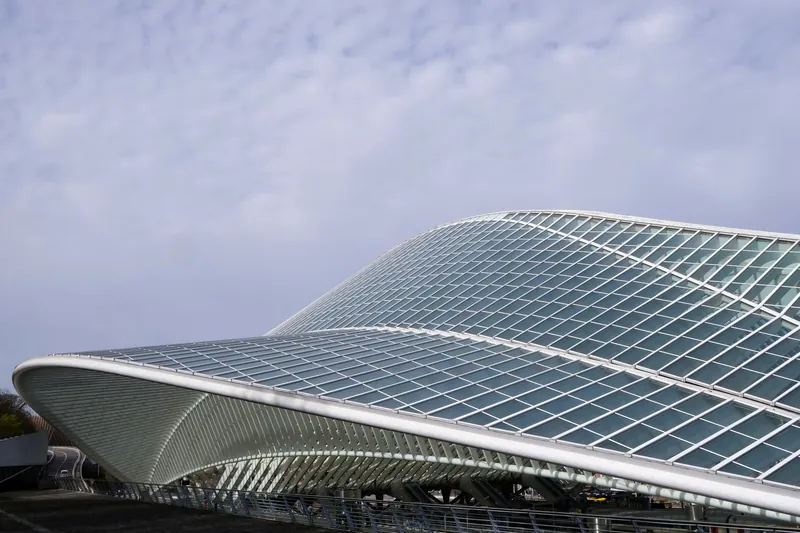
There was no concept, just the building. I followed whatever caught my eye and chose the frames I found most beautiful: the rhythm of the ribs, the sweep of the roof, the lines that run through the whole station.
Process
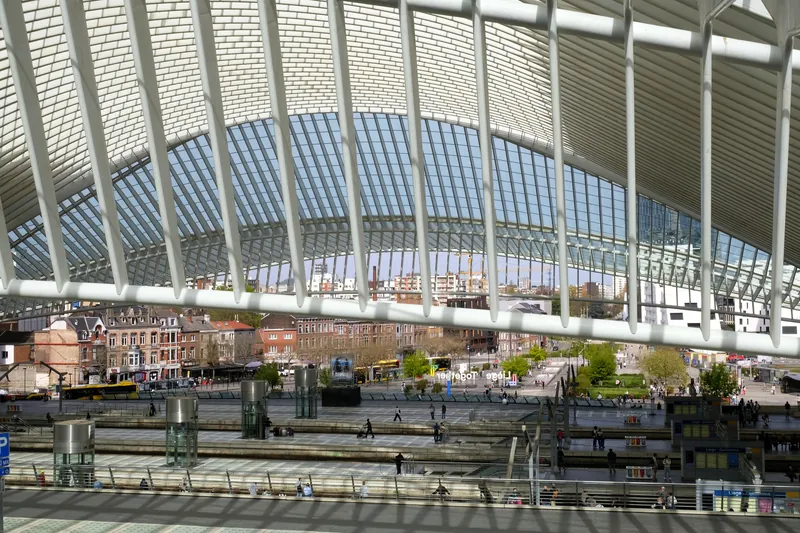
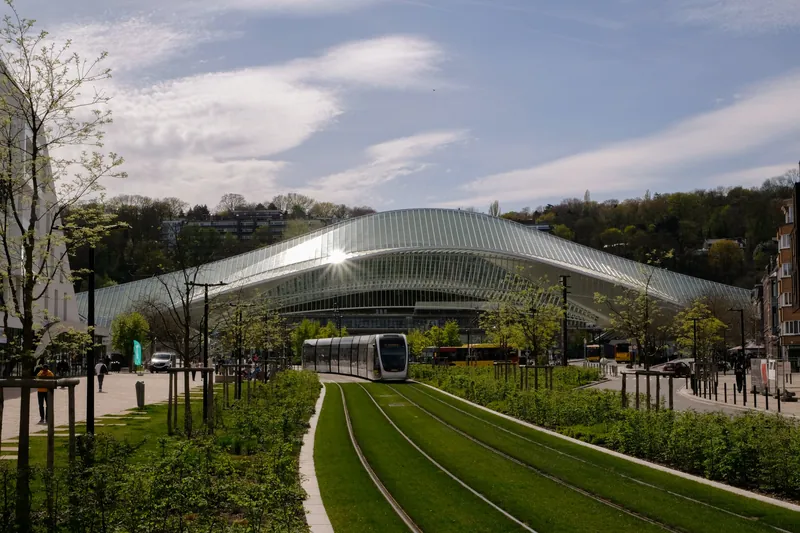
The biggest challenge was light. The roof is almost entirely glass, so the sun floods the hall and pushes the highlights to their limit, and one of the images shows exactly that. With a building this large, just finding a spot high enough to capture it as a whole becomes part of the work.
Result & learning
Architecture photography is mostly scouting: the time of day, the angle and the spot you shoot from decide the image before you press the shutter. Next time, I'd plan around the light first.